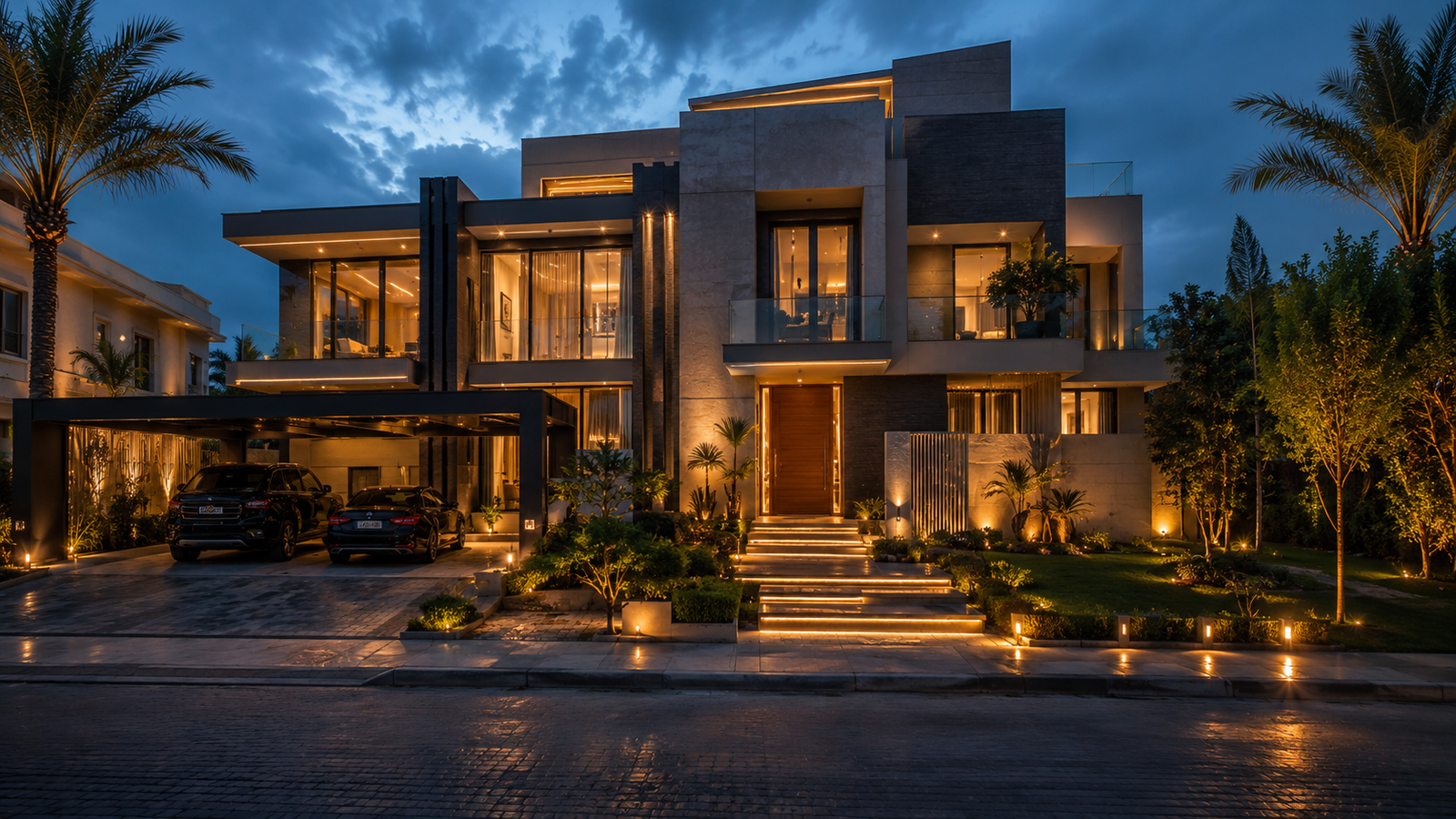
The most expensive smart-home mistakes in Egypt are not made during installation. They are made months earlier, during the finishing (tashteeb) stage, when the walls are still open and nobody thought about cabling yet.
We get the same call almost every week: a villa in New Cairo or an apartment in the North Coast is fully finished, the marble is down, the paint is perfect, and now the owner wants smart lighting and cameras. At that point the honest answer is that half of what they wanted now needs surface trunking, wireless workarounds or chased walls that damage the new finish. A little planning before tashteeb would have saved all of it.
Why the finishing stage decides everything
A wired smart-home system (KNX or HDL Buspro) needs its cables pulled while the walls are still bare. Data points, a small network cabinet, and a proper distribution board are far cheaper to add before plastering than to retrofit afterwards. The difference is not small: retrofitting can add 30 to 50 percent to the same scope, and some things simply cannot be done cleanly at all.
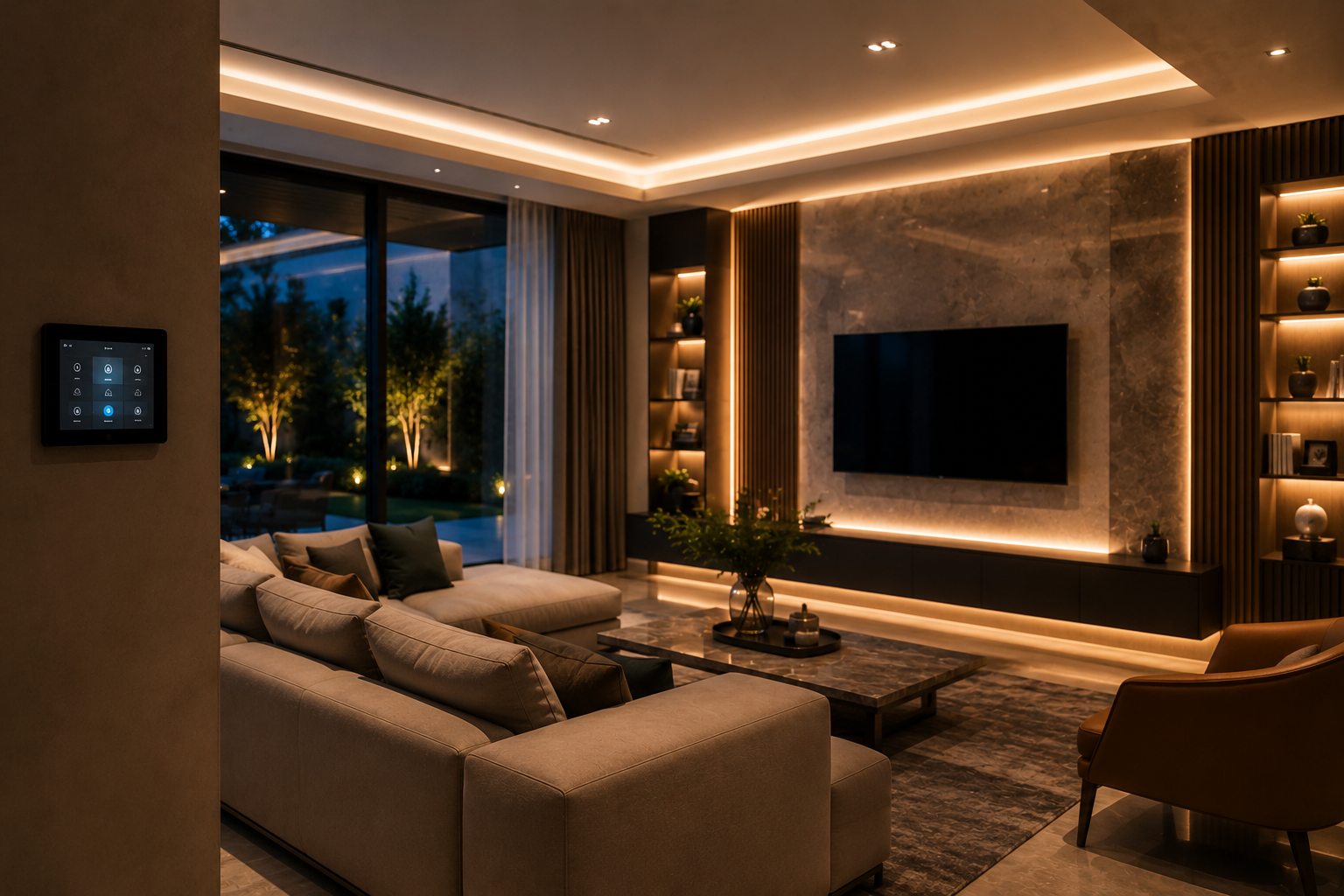
The good news is that you do not need to decide on every gadget now. You only need to reserve the infrastructure: conduits, spare cables, and a clean spot for the panel. Think of it like leaving a sleeve in the wall so the smart part can go in whenever your budget allows.
You are not buying automation during finishing. You are buying the option to add it later without breaking your walls.
The checklist to hand your contractor
Give this list to your muqawel or electrician before the walls close. Even if you install nothing today, following it keeps every future option open:
- Pull a spare data cable (Cat6) from the main distribution point to the TV wall, the router location and each floor.
- Reserve a network cabinet or a ventilated cupboard near the electrical board for the smart panel and switches.
- Run conduits to curtain and shutter motors, the main entrance lock, the gate, and any outdoor camera positions.
- Bring a neutral wire to every light switch box; most smart switches need it and old Egyptian wiring often skips it.
- Add a dedicated, stabilized power line for the rack, and leave room for a small UPS to ride through power cuts.
Wired, wireless, or both?
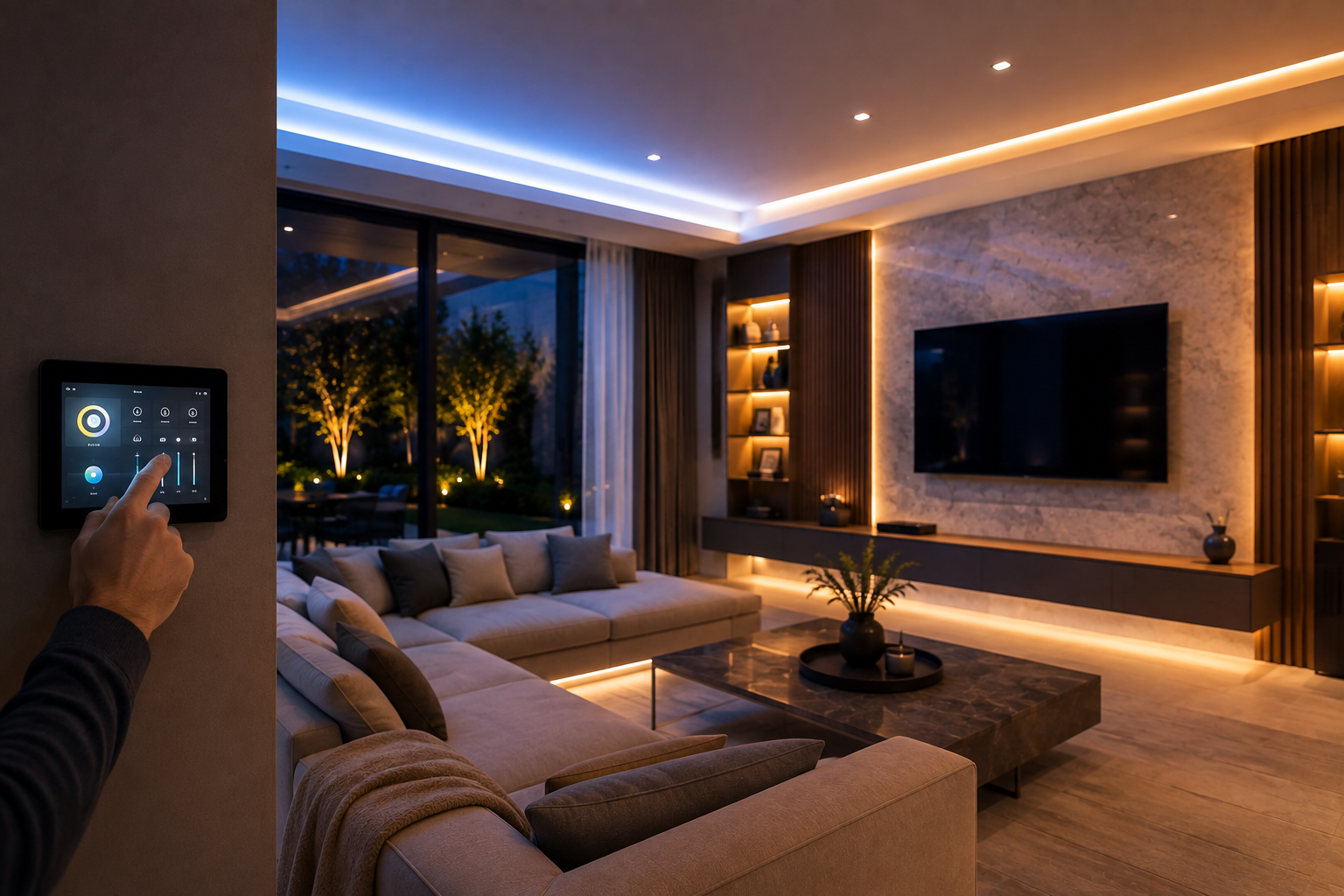
For a full villa, a wired backbone is worth the planning because it is stable and does not depend on Wi-Fi coverage across thick concrete walls. For a finished apartment where the walls are already closed, a good wireless system (Zigbee based) is often the realistic path and can still cover lighting, climate and security nicely.
In practice we mix the two: wired where it matters most (main lighting, shutters, the panel) and wireless for the rooms or additions that come later. Planning the conduits now is what keeps that choice in your hands instead of the contractor's.
Before tashteeb, reserve cabling, a panel cabinet and a neutral wire at every switch. Install the smart devices whenever you like; just never close the walls without the infrastructure.
What it costs to plan ahead
Reserving the infrastructure during finishing is a small fraction of the full system: mostly conduit, cable and a few hours of coordination. Homeowners who skip it usually pay it back several times over in retrofitting, and still end up with visible trunking. Spending a little on planning is the cheapest insurance in the whole project.
If you are still in the finishing stage, this is the single best moment to bring in a smart-home partner, even for one site visit. An hour walking the site with your electrician can lock in every future upgrade.
Where Expert Smart fits in
We regularly join projects during finishing to mark cable routes and panel positions with the owner and the contractor, so nothing is closed by mistake. Whether you build now or automate later, that one visit protects your walls and your budget. If your project is still open, this is the moment to talk.